If you've searched for Toyota Forester oil change specifications with filter details, you're not alone. This is one of the most common mix-ups in car maintenance searches. Here's the thing: the Forester is actually a Subaru model, not a Toyota. But thousands of people type "Toyota Forester" every month, and that confusion can lead to the wrong oil, wrong filter, and expensive engine problems down the road. Getting the right oil change specs and filter for your Forester protects your engine, keeps your warranty valid, and saves you money compared to dealership service prices.
Is the Forester a Toyota or a Subaru?
The Subaru Forester has been in production since 1997 and is built by Subaru (formerly Fuji Heavy Industries). Toyota does own a stake in Subaru's parent company, which may explain some of the confusion. But mechanically, every Forester ever made is a Subaru. The engine, oil requirements, and filter specifications follow Subaru standards not Toyota ones. Using Toyota-spec oil filters or following Toyota oil change intervals on a Forester could cause problems because the engineering is different.
If you're looking for filter compatibility info specific to the 2005 model, we've covered what oil filter works with the 2005 Forester in detail on a separate page.
What oil does the Subaru Forester actually take?
Oil specifications vary by model year and engine type. Here's a practical breakdown:
- 2000–2010 Forester (EJ25 engine): 0W-20 or 5W-30 synthetic. Subaru recommends 0W-20 for better fuel economy, but 5W-30 works well in warmer climates. Oil capacity is approximately 4.2 quarts (4.0 liters) with filter.
- 2011–2018 Forester (FB25 engine): 0W-20 full synthetic only. Capacity is about 4.8 quarts (4.5 liters) with filter. Subaru specifically designed this engine for 0W-20.
- 2019–present Forester (FB25 engine): 0W-20 full synthetic. Capacity remains around 4.8 quarts with filter.
- 2004–2013 Forester XT (EJ25 turbo): 5W-30 synthetic recommended. Turbo engines run hotter and need the slightly thicker oil for protection. Capacity is approximately 4.2 quarts with filter.
Always check your owner's manual for the exact spec. Subaru's recommended oil change interval is typically every 6,000 miles or 6 months, whichever comes first though many mechanics suggest 5,000 miles, especially for turbo models or severe driving conditions.
Which oil filter fits the Forester?
The oil filter is just as important as the oil itself. Subaru uses a spin-on style filter on most Forester engines. Common compatible filters include:
- Subaru OEM filter: Part number 15208AA170 (black) or 15208AA160 (blue, older models). This is the safest choice because it's engineered for Subaru's bypass valve pressure settings.
- Aftermarket options: Fram XG7317, Purolator PL14612, WIX 57055, and Mann W 68/3 are all commonly used. However, not all aftermarket filters match Subaru's bypass valve spec of 23 PSI. A filter with the wrong bypass pressure can either restrict flow or fail to filter properly.
For a detailed look at the best filter options when using synthetic oil, check out our guide on choosing the best oil filter for the Forester with synthetic oil.
What happens if you use the wrong oil or filter?
Using incorrect oil viscosity can cause these specific issues:
- Oil too thin (e.g., 0W-20 in a turbo engine): Insufficient protection under high heat. Turbo bearings wear faster. Oil consumption increases.
- Oil too thick (e.g., 10W-40 in a newer FB25): Poor flow during cold starts. Variable valve timing (AVCS) system may not operate correctly. Fuel economy drops.
- Wrong filter: If the bypass valve opens at the wrong pressure, unfiltered oil circulates through the engine. Subaru's boxer engine layout already makes oil drainage tricky the last thing you want is dirty oil reaching critical parts.
How do you do a Forester oil change at home?
Changing the oil on a Forester is straightforward if you have the right tools:
- Warm the engine for 2–3 minutes. Warm oil drains faster and carries more contaminants out.
- Place a drain pan under the oil pan. The drain plug is a 17mm bolt on the bottom of the pan.
- Remove the drain plug and let oil drain for about 5 minutes.
- Remove the old oil filter. On most Forester models, the filter sits on the front of the engine, accessible from above or below depending on the year.
- Lubricate the new filter's gasket with fresh oil. Hand-tighten plus 3/4 turn do not use a wrench on the filter.
- Replace the drain plug with a new crush washer (Subaru part 803916010). Torque to 31 ft-lbs.
- Fill with the correct amount and type of oil.
- Start the engine, check for leaks, then verify the dipstick level after 2 minutes.
We've put together a complete reference on Forester oil change specifications with filter details if you want all the numbers in one place.
What are the most common mistakes people make?
- Over-tightening the filter: This crushes the gasket and can cause leaks. Hand-tight plus 3/4 turn is the rule.
- Reusing the drain plug crush washer: A crushed washer won't seal properly on the second use. These cost less than a dollar each.
- Forgetting to reset the oil light: Hold the trip reset button while turning the key to ON (not start) on older models. Newer Foresters require a menu reset through the steering wheel controls.
- Using conventional oil in FB25 engines: These engines are designed exclusively for 0W-20 synthetic. Conventional oil in this weight doesn't exist in a reliable form.
- Checking oil level immediately after filling: Always wait at least 2 minutes after running the engine so oil settles back into the pan.
Should you use synthetic or conventional oil?
For any Forester made after 2011, synthetic oil is not optional it's required. The FB25 engine was designed around 0W-20 synthetic. For 2000–2010 models with the EJ25, synthetic is strongly recommended even though conventional 5W-30 was the original spec. Synthetic oil handles heat better, lasts longer, and flows more easily during cold starts. Given that boxer engines have horizontally opposed cylinders where oil can pool on cylinder walls, better flow means less oil burning and cleaner combustion.
What brand of synthetic oil works well?
Any major brand that meets the API SN Plus or SP standard will work: Mobil 1, Pennzoil Platinum, Castrol Edge, or Subaru's own OEM oil. What matters most is getting the correct weight and the right specification rating, not the brand name.
Quick checklist before your next oil change
- Confirm your Forester's model year and engine type (EJ25 vs. FB25 vs. EJ25 turbo).
- Check your owner's manual for the correct oil viscosity 0W-20 for most, 5W-30 for turbo models.
- Buy the right amount of oil (4.2 quarts for EJ25, 4.8 quarts for FB25, with filter).
- Choose an OEM or verified-compatible oil filter with the correct bypass valve pressure.
- Pick up a new drain plug crush washer.
- Have a 17mm socket, oil filter wrench (just in case), drain pan, and funnel ready.
- Reset the maintenance light after the change.
- Check for leaks 10 minutes and 50 miles after the job.
Next step: Look up your exact Forester year, grab your owner's manual, and write down the oil spec and filter part number on a sticky note in your glove box. That one habit prevents the most common oil change mistakes. And if you're working on a 2005 model specifically, the filter compatibility details for that year will help you get the right part on the first try.
Typography matters when you're creating printable maintenance logs fonts like Montserrat keep everything clean and readable in your garage binder.
 What Oil Filter Is Compatible with a Toyota Forester
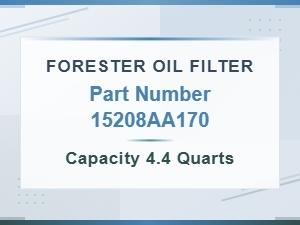 Forester Oil Filter Part Number and Capacity Quarts
 Best Oil Filter for 2005 Forester with Synthetic Oil
 Subaru Forester Oil Filter Compatibility Guide and Verification Tips
 Forester 2.5l Engine Oil Type and Amount
 Best Synthetic Oil for 2005 Subaru Forester: Recommended Viscosity Guide