Knowing the exact oil capacity for your Subaru Forester sounds like a small detail until you pour in too much or too little and deal with engine problems down the road. Whether you're doing your first oil change at home or just want to double-check what your mechanic is putting in, getting the right amount matters. Overfilling can cause foaming and pressure issues, while underfilling starves your engine of lubrication. This guide breaks down everything you need to know about Subaru Forester oil capacity specifications so you can keep your engine running clean and avoid costly mistakes.
How Much Oil Does a Subaru Forester Take?
The oil capacity depends on the engine and model year. Here's a quick breakdown of the most common configurations:
- 2.5L naturally aspirated engine (2014–2024): Approximately 4.4 quarts (4.2 liters) with filter change
- 2.5L turbocharged engine (older XT models, 2004–2013): Approximately 4.2–4.5 quarts depending on the generation
- 2.0L turbocharged engine (2014–2018 XT): Approximately 4.8 quarts (4.5 liters) with filter
- 2.5L engine (1998–2002 first generation): Approximately 4.2 quarts with filter
These numbers include the oil filter. If you're not replacing the filter during your change, the capacity drops slightly. Always check your owner's manual or the detailed specs for the Forester 2.5L engine oil type and amount to confirm the exact number for your specific model year.
What Type of Oil Should I Use in My Forester?
Subaru recommends 0W-20 full synthetic oil for most modern Forester models (2014 and newer). Older models with the 2.5L turbo engine often call for 5W-30. Using the wrong viscosity can affect fuel economy, engine protection, and even your warranty coverage.
Common brands that meet Subaru's specifications include:
- Subaru OEM 0W-20 synthetic oil
- Mobil 1 0W-20
- Pennzoil Platinum 0W-20
- Castrol Edge 0W-20
Look for oils that meet the API SN PLUS or SP rating and ILSAC GF-5 or GF-6 certification. These ratings confirm the oil meets the wear and deposit protection standards Subaru requires for the boxer engine.
Why Does the Boxer Engine Design Affect Oil Needs?
Subaru's horizontally opposed boxer engine sits flat in the engine bay. This layout changes how oil drains and circulates compared to inline or V-shaped engines. Because the cylinders lie on their sides, oil can pool differently when the engine is off, and the sump design is shaped to account for this.
That's why you can't just guess the capacity based on what another 2.5L engine from a different brand might take. The boxer design uses a unique oil pan shape, and overfilling even by half a quart can lead to oil aeration where air bubbles mix into the oil and reduce its ability to protect moving parts.
What Happens If I Overfill or Underfill the Oil?
Both situations cause real problems:
Overfilling
- Oil foams as the crankshaft whips through excess oil
- Foamed oil loses its ability to lubricate properly
- Increased crankcase pressure can push oil past seals and gaskets
- Catalytic converter damage from burning excess oil
Underfilling
- Oil pump can't maintain proper pressure
- Increased friction and heat on bearings and cam journals
- Potential for engine seizure in extreme cases
- Faster breakdown of remaining oil due to higher operating temperatures
The safe range is narrow. Stick to the exact specification listed for your year and engine, and always verify with the dipstick after filling.
How Do I Check the Oil Level Correctly After an Oil Change?
Subaru's procedure matters here because the boxer engine reads differently on a dipstick than a conventional upright engine:
- Start the engine and let it run for 2–3 minutes to circulate new oil through the filter and passages.
- Shut the engine off and wait about 5 minutes for oil to settle back into the pan.
- Remove the dipstick, wipe it clean, reinsert it fully, then pull it out again.
- Read the level oil should sit between the two dots or crosshatched area on the dipstick.
- If it's below the lower mark, add oil in small amounts (4–6 ounces at a time) and recheck.
Don't rely on the first reading right after pouring oil in. The filter absorbs some oil initially, so the level will drop slightly after the first start. That's normal.
How Does the Oil Filter Affect Total Capacity?
The oil filter holds between 0.2 and 0.4 quarts of oil depending on the brand and model. When you change both the oil and filter together, the total capacity includes what the empty, dry filter will absorb. If you only drain the oil but leave the old filter in place, you'd technically need less but that defeats the purpose of the service.
Subaru uses a cartridge-style filter on newer Foresters (2014+) rather than a traditional spin-on canister. This design changes how much oil the filter element holds. You can find the exact filter part number and its oil retention specs in the guide covering the Forester oil filter part number and capacity.
Do Turbo and Non-Turbo Foresters Use the Same Amount of Oil?
No. Turbocharged engines generally need slightly more oil because the turbo bearings require their own oil supply lines, and the oil cooler (if equipped) adds volume to the system. For example:
- 2019 Forester 2.5L (non-turbo): 4.4 quarts with filter
- 2018 Forester XT 2.0L turbo: 4.8 quarts with filter
That 0.4-quart difference might seem minor, but running a turbo engine low by even a small amount puts extra stress on the turbocharger bearings, which spin at extremely high RPMs and depend entirely on clean oil flow.
Common Mistakes People Make With Forester Oil Changes
- Using the wrong oil weight: Putting 5W-30 in a car that calls for 0W-20 increases internal drag and reduces fuel economy. It won't destroy the engine immediately, but it's not what Subaru engineered for.
- Not replacing the crush washer: The drain plug uses an aluminum crush washer that should be replaced each time. Reusing it can cause a slow leak.
- Over-tightening the drain plug: Subaru's aluminum oil pan strips easily. The torque spec is around 31 ft-lbs don't crank on it with a breaker bar.
- Forgetting to reset the maintenance light: After the oil change, hold the trip reset button, turn the ignition on, and keep holding until the light flashes and resets.
- Ignoring the oil consumption rate: Some older Forester engines are known to consume oil between changes. Check the level every 1,000 miles to stay ahead of it.
How Often Should I Change the Oil in My Forester?
Subaru's maintenance schedule recommends oil changes every 6,000 miles or 6 months, whichever comes first, for 2011 and newer models using synthetic oil. Older models with conventional oil were on a 3,750-mile or 3-month cycle.
If you drive in severe conditions frequent short trips, extreme temperatures, dusty roads, or towing cut that interval by about 30%. So roughly every 4,000–4,500 miles for city and mixed driving.
Keeping a simple log or using a free app to track mileage between changes helps you avoid going too long, especially if you don't drive many miles and the 6-month time limit kicks in before the mileage does.
Quick Reference: Subaru Forester Oil Capacity by Year
If you need to look up your exact specs fast, here's a simplified table for the most popular generations:
- 1998–2002 (SF): 2.5L, 4.2 quarts, 5W-30
- 2003–2008 (SG): 2.5L, 4.2–4.5 quarts, 5W-30
- 2009–2013 (SH): 2.5L, 4.4 quarts, 5W-30 / XT turbo 4.4 quarts, 5W-30
- 2014–2018 (SJ): 2.5L, 4.4 quarts, 0W-20 / XT 2.0T, 4.8 quarts, 0W-20
- 2019–2024 (SK): 2.5L, 4.4 quarts, 0W-20
You can dig deeper into the full specifications with the complete Subaru Forester oil capacity specifications breakdown organized by model year and trim level.
Should I Use Subaru OEM Oil or an Aftermarket Brand?
Both work fine as long as the oil meets Subaru's viscosity and certification requirements. Subaru's own OEM 0W-20 is manufactured by Idemitsu, which also sells its own branded version at a lower price. There's no mechanical advantage to using the Subaru-branded bottle the oil inside is essentially the same.
What you should avoid are no-name discount oils that don't carry the API or ILSAC certification marks. Saving $2 per quart isn't worth the risk of increased wear on your boxer engine, which is expensive to service if something goes wrong internally.
For reference, you can check the API's official motor oil guide for current certification standards: Montserrat.
What Should I Do Before My Next Oil Change?
Here's a practical checklist to keep in your glove box:
- Confirm your exact engine size and model year (check the VIN sticker on the driver's door jamb)
- Buy the correct oil viscosity and amount remember, most 2.5L non-turbo Foresters need about 4.4 quarts
- Pick up a new drain plug crush washer (Subaru part number 803916010)
- Get the right oil filter for your model generation
- Have a torque wrench set to 31 ft-lbs for the drain plug
- Warm the engine for 2–3 minutes before draining for faster, more complete drainage
- Check the oil level with the dipstick 5 minutes after filling not immediately
- Reset the maintenance reminder light after you're done
- Log the date and mileage so you know when the next change is due
Getting the oil capacity right is one of the easiest ways to protect your engine between major services. Take two minutes to look up your specs before you start, and you'll avoid the headaches that come with guessing.
 Forester 2.5l Engine Oil Type and Amount
 Forester Recommended Oil Viscosity Chart and Capacity Specs
 Subaru Forester Oil Change Service Intervals and Capacity Specs
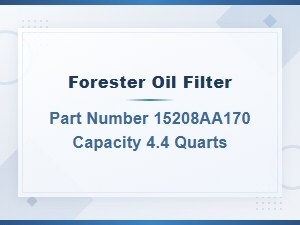 Forester Oil Filter Specifications and Capacity
 Best Synthetic Oil for 2005 Subaru Forester: Recommended Viscosity Guide
 Subaru Forester Xt Oil Capacity and Recommended Oil Type